Our mission is to make AGI benefit all of humanity. If AI is going to be useful for everyone, it needs to work well across languages and cultures. About 80 percent of people worldwide do not speak English as their primary language, yet most existing benchmarks that measure non-English language capabilities fall short.
Existing multilingual benchmarks like MMMLU(opens in a new window) are now saturated—top models cluster near high scores—which make them less useful for measuring real progress. In addition, current benchmarks mostly focus on translation or multiple-choice tasks. They don’t adequately capture what really matters for evaluating an AI system’s language capabilities—understanding context, culture, history, and the things that matter to people where they live.
That’s why we built IndQA, a new benchmark designed to evaluate how well AI models understand and reason about questions that matter in Indian languages, across a wide range of cultural domains. While our aim is to create similar benchmarks for other languages and regions, India is an obvious starting point. India has about a billion people who don’t use English as their primary language, 22 official languages (including at least seven with over 50 million speakers), and is ChatGPT’s second largest market.
This work is part of our ongoing commitment to improve our products and tools for Indian users, and to make our technology more accessible throughout the country.
IndQA evaluates knowledge and reasoning about Indian culture and everyday life in Indian languages. It spans 2,278 questions across 12 languages and 10 cultural domains, created in partnership with 261 domain experts from across India. Unlike existing benchmarks like MMMLU and MGSM, it is designed to probe culturally nuanced, reasoning-heavy tasks that existing evaluations struggle to capture.
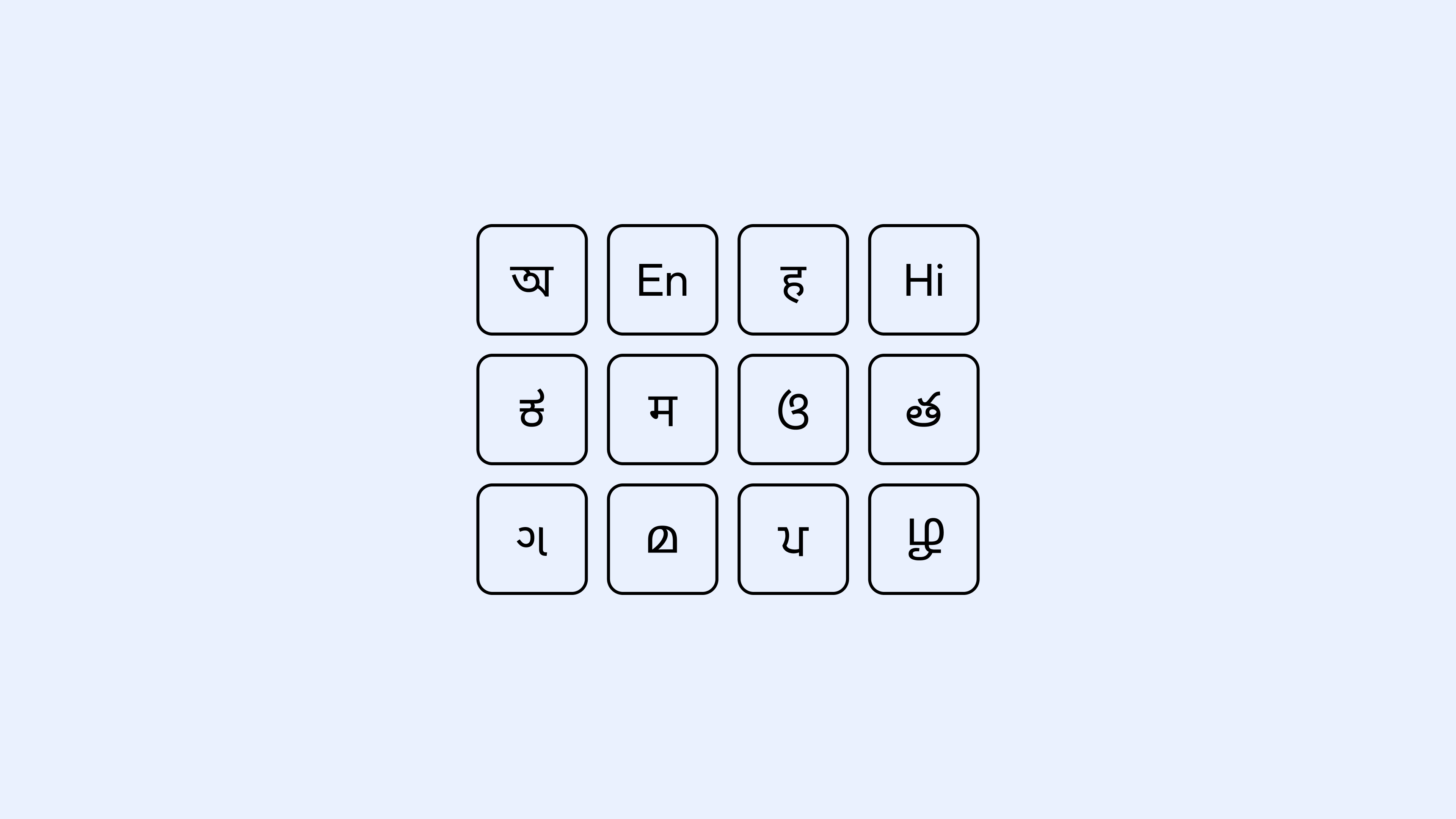
IndQA covers a broad range of culturally relevant topics, such as Architecture & Design, Arts & Culture, Everyday Life, Food & Cuisine, History, Law & Ethics, Literature & Linguistics, Media & Entertainment, Religion & Spirituality, and Sports & Recreation—with items written natively in Bengali, English, Hindi, Hinglish, Kannada, Marathi, Odia, Telugu, Gujarati, Malayalam, Punjabi, and Tamil. _Note: We specifically added Hinglish given the prevalence of code-switching in conversations._
Each datapoint includes a culturally grounded prompt in an Indian language, an English translation for auditability, rubric criteria for grading, and an ideal answer that reflects expert expectations.
IndQA uses a rubric-based approach. Each response is graded against criteria written by domain experts for that specific question. The criteria spell out what an ideal answer should include or avoid, and each one is given a weighted point value based on its importance. A model-based grader checks whether each criterion is met. The final score is the sum of the points for criteria satisfied out of the total possible.
## How we built IndQA
## Example questions
Bengali Gujarati Hindi Hinglish Kannada Malayalam Marathi Odia Punjabi Tamil Telugu
## Language: Bengali
## Domain: Literature and linguistics
‘দণ্ডক থেকে মরিচঝাঁপি’ উপন্যাসের লেখক নিম্নবর্ণের পুরুষ ও নারীদের দণ্ডকারন্যে পুনর্বাসন পরবর্তী জীবন কিভাবে দেখিয়েছেন? দণ্ডকারণ্যে পুনর্বাসন কি সরকারী উদাসীনতার ফল? পরিবর্তিত প্রাকৃতিক পরিবেশের সাথে উদ্বাস্তুরা কিভাবে মানিয়ে নিয়েছিল?
How did the writer of Bengali novel ‘Dandak Theke Marichjhanpi’ depict the post-rehabilitation lives of lower caste men and women? Was the rehabilitation in Dandakaranya a result of governmental indifference? What was its relation with the new natural landscapes?
## Domain: Food and cuisine
কোন পরিপ্রেক্ষিতে উনিশ শতকের শেষ দিক থেকে রান্নার বইগুলো বেরচ্ছিল ? প্রথম বাংলা রান্নার বইটির সাথে বিপ্রদাস মুখোপাধ্যায় রচিত বইটির পার্থক্য কোথায় ? বিপ্রদাসের উদ্যোগে প্রকাশিত পত্রিকাটি চলেছিল কতদিন ? বিপ্রদাস ও প্রজ্ঞা সুন্দরীর লেখা অনুসরণ করে দিঘাপতিয়া থেকে কোন বইটি বেরিয়েছিল ?
In what context were cookbooks published from the end of the 19th century? What is the difference between the first Bengali cookbook and the book written by Bipradas Mukherjee? How long did the magazine published by Bipradas run? Which book was published by Dighapatiya following the writings of Bipradas and Pragya Sundari?
## Improvements over time
We use IndQA to evaluate how recent frontier models perform and chart progress over the last couple years. With IndQA we can see that OpenAI’s models have improved significantly over time on Indian languages (with caveats), but still have substantial room for improvement. We look forward to improving performance and sharing results for future models.
We also stratify performance on IndQA by Language and Domain below, comparing GPT‑5 Thinking High to other frontier models.
Because questions are _not identical_ across languages, IndQA is not a language leaderboard; cross‑language scores shouldn’t be interpreted as direct comparisons of language ability. Instead, we plan to use IndQA to measure _improvement over time_ within a model family or configuration.
Additionally, because questions were filtered to those GPT‑4o, OpenAI o3, GPT‑4.5, and (post public launch) GPT‑5 could not answer sufficiently, question selection is adversarial against these models. This potentially confounds the relative performance of GPT‑5, and could disadvantage all OpenAI models compared to non-OpenAI models.
## The experts behind IndQA
We’re grateful to the 261 Indian experts—journalists, linguists, scholars, artists, and industry practitioners—who authored and reviewed questions for IndQA. A few examples of the experts we worked with includes:
We hope the release of IndQA will inform and inspire new benchmark creation from the research community. IndQA style questions are especially valuable in languages or cultural domains that are poorly covered by existing AI benchmarks. Creating similar benchmarks to IndQA can help AI research labs learn more about languages and domains models struggle with today, and provide a north star for improvements in the future.
Improving instruction hierarchy in frontier LLMs Research Mar 10, 2026
Reasoning models struggle to control their chains of thought, and that’s good Research Mar 5, 2026
Introducing GPT-5.4 Product Mar 5, 2026
Our Research * Research Index * Research Overview * Research Residency * OpenAI for Science * Economic Research
Latest Advancements * GPT-5.3 Instant * GPT-5.3-Codex * GPT-5 * Codex
Safety * Safety Approach * Security & Privacy * Trust & Transparency
ChatGPT * Explore ChatGPT(opens in a new window) * Business * Enterprise * Education * Pricing(opens in a new window) * Download(opens in a new window)
Sora * Sora Overview * Features * Pricing * Sora log in(opens in a new window)
API Platform * Platform Overview * Pricing * API log in(opens in a new window) * Documentation(opens in a new window) * Developer Forum(opens in a new window)
For Business * Business Overview * Solutions * Contact Sales
Company * About Us * Our Charter * Foundation * Careers * Brand
Support * Help Center(opens in a new window)
More * News * Stories * Livestreams * Podcast * RSS
Terms & Policies * Terms of Use * Privacy Policy * Other Policies
(opens in a new window)(opens in a new window)(opens in a new window)(opens in a new window)(opens in a new window)(opens in a new window)(opens in a new window)
OpenAI © 2015–2026 Manage Cookies
English United States