Across homes, fairs, and everyday use, carpets remain practical textiles that are spread on floors, folded away when not needed, and replaced over time. Behind this simple household item lies a chain of work that begins with yarn preparation and ends in a carefully woven surface, often produced through small village groups rather than large factory units.
In Uttar Pradesh’s Sonbhadra district, carpet weaving follows this decentralised model, where weaving activity is also shaped by the agricultural calendar. Households often balance craft work with farming responsibilities, adjusting weaving schedules around sowing, monsoon preparation, and harvest periods.
Carpets are the district’s notified product under the One District One Product (ODOP) programme, and weaving remains a livelihood for several village clusters that continue the practice through shared skills and community-based production.
Gaurishankar, a carpet weaver from the district, has been associated with the craft since around 1990. He is part of a weaving group of nearly 30–35 artisans where both men and women participate in the same weaving work depending on the availability of orders.
The cluster’s experience is also connected to the region’s older carpet centres such as Bhadohi and Mirzapur, where weaving traditions developed earlier and where many artisans learned techniques through hands-on exposure. Even today, work sometimes arrives from outside the district, and weavers take up orders as they come.
Over time, weaving in Sonbhadra has increasingly shifted to home-based looms, allowing families to combine carpet production with their daily routines and agricultural responsibilities.
The weaving ecosystem in Sonbhadra works through informal groups rather than a single manufacturing unit. People join the production cycle when orders arrive and depending on how much time they can allocate alongside farming or household work.
Women who earlier worked as daily wage labourers have gradually learned weaving within these village groups. Many now weave carpets from their homes, contributing to the cluster’s production while maintaining household responsibilities.
Orders often come through established craft networks. The cluster is connected to the handicrafts channel that issues artisan identity cards and links artisans with government programmes and opportunities. Some orders also move through contacts based in Varanasi who provide designs, place weaving orders, and collect finished carpets.
Exhibitions form another part of the cluster’s activity. The group has participated multiple times in fairs such as Dilli Haat, and has also taken part in exhibitions in places like Jaunpur and Varanasi (Pandepur). These events allow artisans to observe buyer preferences, popular designs, and practical carpet sizes that work in the market.
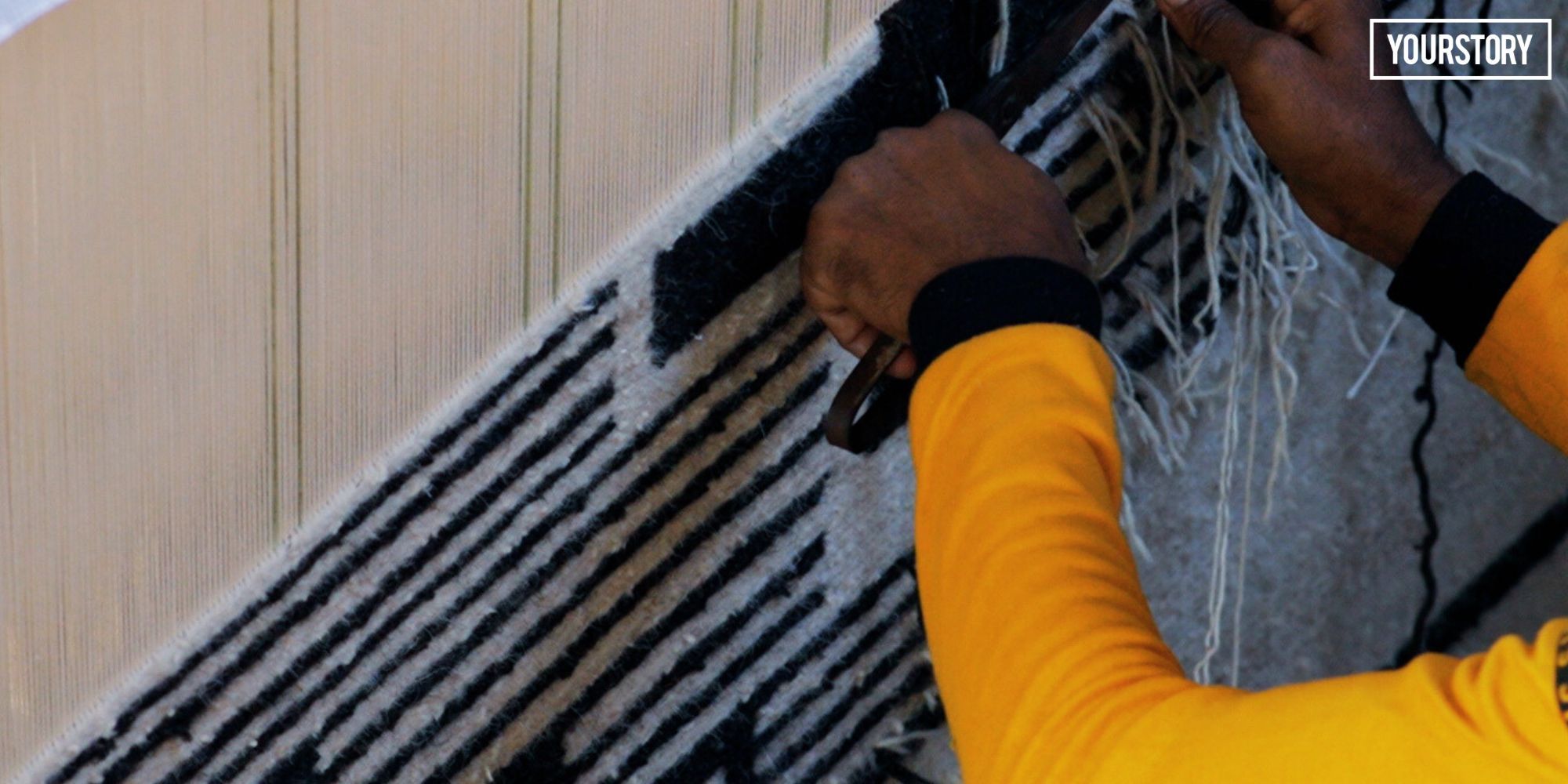
The weaving process begins with preparing yarn. The yarn is first opened and organised using simple hand tools before being rolled into workable balls. A loom is then set up using a basic frame with supporting posts, after which warp threads are stretched and arranged.
Weaving progresses gradually as the weaver guides the yarn across the loom, using hand tools to tighten the weave and maintain an even surface. Once the carpet is fully woven, trimming and finishing are completed with scissors and other hand implements.
The cluster also recently completed a two-month training programme conducted through the handicrafts channel linked to artisan identity cards. Support under the ODOP programme has provided basic loom equipment such as posts and rollers, and has enabled participation in fairs including Delhi Haat.
However, two practical factors continue to influence the rhythm of work. First, weaving slows during major agricultural periods—particularly monsoon ploughing and harvest seasons—when households focus on farming activities. Second, the pace of production often depends on the arrival of new orders and exhibition opportunities.
For weaving to remain steady throughout the year, order cycles need to extend beyond seasonal fairs, while production schedules must remain flexible enough to accommodate the agricultural calendar that shapes labour availability in the district.
In Sonbhadra, the continuity of carpet weaving ultimately depends on how reliably orders arrive and how effectively village looms can align craft production with the seasonal rhythm of rural life.