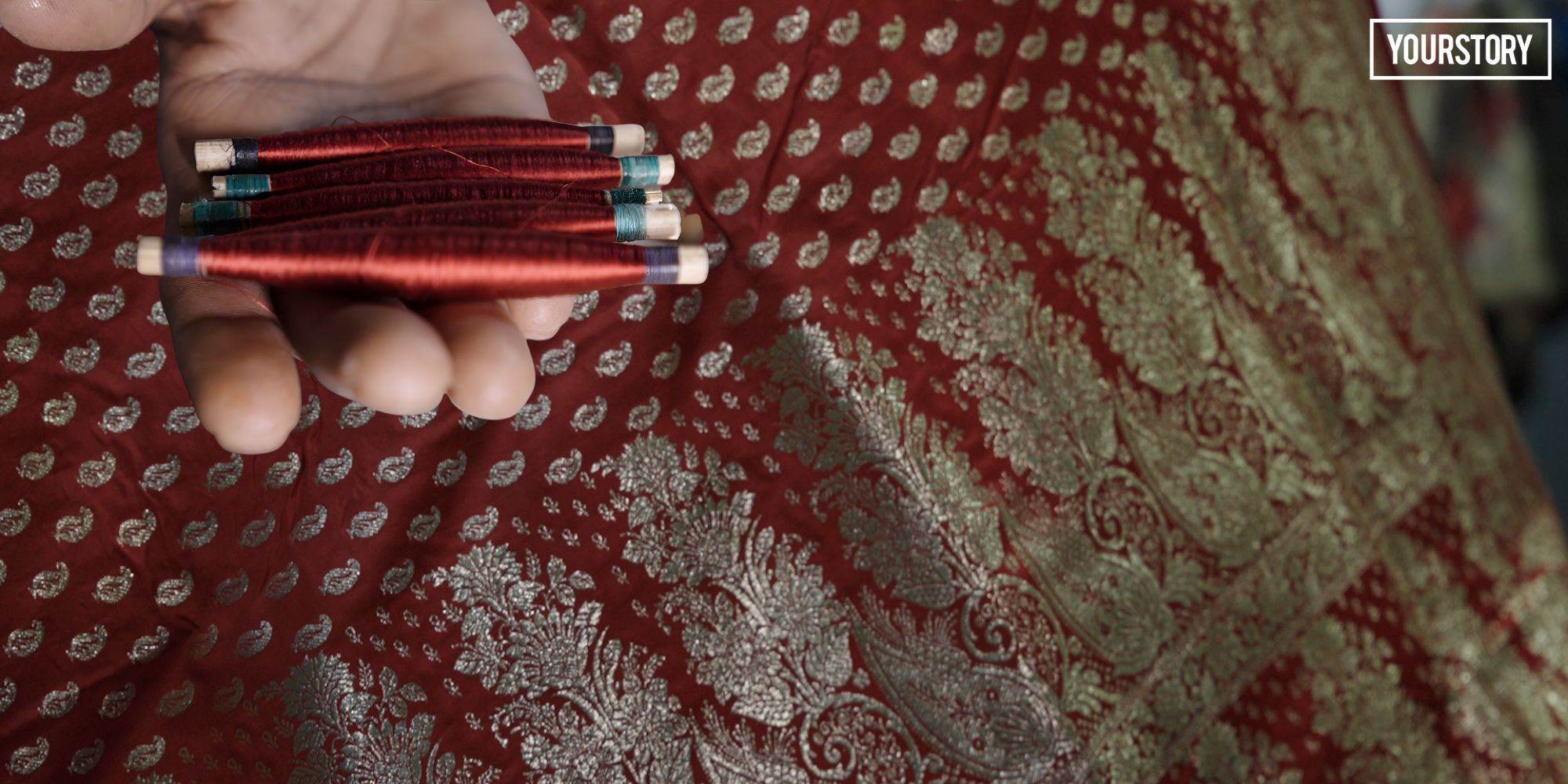
Across weddings, festive occasions, and ceremonial gifting, Banarasi silk products remain one of the most recognisable textiles associated with Uttar Pradesh. In Varanasi, the silk economy extends beyond sarees to include dupattas, fabrics, stoles, dress materials, and ceremonial textiles woven with intricate zari and dense silk patterns. Buyers often return to known traders and weaving families for occasion-specific purchases, where trust in the weave, silk quality, and craftsmanship shapes demand.
The production system runs through a distributed chain across homes and small workshops. Thread preparation, filling of bobbins, loom setting, weaving, dyeing, polishing, and final finishing are handled by different individuals before a product reaches the market. The strength of the cluster lies in its specialised weaving skills and design vocabulary—motifs, borders, and brocades that have evolved through generations of handloom practice.
Under the One District One Product (ODOP) programme of the Government of Uttar Pradesh, silk products from Varanasi have gained a stronger policy identity. Participation in exhibitions, fairs, and promotional platforms has opened additional routes for artisans and traders to showcase Banarasi textiles to wider domestic and international buyers.
In neighbourhoods across Varanasi, weaving continues to function as a family-based occupation. Artisans often inherit the craft from earlier generations and begin by assisting in preparatory work before operating looms independently. Homes and small workshops become production spaces where different stages of the weaving process are coordinated.
Preparatory work such as thread filling and yarn handling is frequently done by women in the household. Once the loom is set, weaving begins—sometimes taking several days depending on the complexity of the design. After weaving, the fabric moves through dyeing, polishing, and finishing before entering trade channels.
This layered process means that the final textile represents the work of multiple specialised hands. Accuracy in product description—whether pure silk handloom, silk blend, or other variants—also plays an important role in maintaining buyer confidence in Banarasi products.
Banarasi silk products move through multiple market channels across India, including wholesale hubs in Delhi, Mumbai, and other major cities. Many weavers depend on traders or intermediaries to connect production with retail markets, while exhibitions and fairs sometimes allow artisans to interact directly with buyers.
Two factors often shape the economics of the craft. One is access to organised selling platforms where artisans can present their work directly to customers. The second is maintaining clear product identification and quality consistency across the supply chain, especially when handloom silk and mixed-fabric products circulate through overlapping retail spaces.
In Varanasi’s weaving economy, the rhythm of production continues through family labour, specialised skills, and a deeply rooted design tradition. When authentic Banarasi silk products reach buyers through transparent and organised selling channels, the connection between craftsmanship and market value remains strong.